We’re excited to announce the new AI-driven architecture of Cogita-PRO - purpose-built for large-scale verification data, combining intelligent log structuring, advanced analysis algorithms, and high-performance visualization. By eliminating log size limitations while improving performance and delivering algorithm-guided context directly to Large Language Models, Cogita-PRO enables verification engineers to extract meaningful insight from massive simulations faster and with greater confidence.
With an orchestrator–sub-agent AI architecture, natural-language interaction with simulation data, agentic MCP integration, expanded regression triage algorithms, and powerful new visualizations, Cogita-PRO 2.0 represents a major step forward in how verification data is explored, understood, and acted upon.
Cogita-PRO employs an orchestrator-sub-agent architecture, a hierarchical AI design pattern that mirrors effective project management structures. In this pattern, a central Orchestrator Agent (manager) receives complex, high-level user requests and intelligently decomposes them into smaller, manageable sub-tasks. These sub-tasks are then delegated to specialized Sub-agents (workers), each optimized for specific domains or functions. Each sub-agent is purpose-built to handle a specific Cogita-PRO feature and its associated capabilities.
Cogita-PRO features an intelligent agent that leverages advanced chat capabilities to streamline verification workflows. Cogita-PRO performs cleaning and structuring of simulation log data and provides the LLM with access to relevant information guided by algorithmic outputs, eliminating log size limitations while improving performance.
The agent enables users to:
Cogita-PRO is agentic flow ready. We provide MCP (Model Context Protocol) to give your AI agent a direct 'plugin' to our tool. This means the agent can 'see' your data and 'act' within our platform in real-time, making your workflow faster.
Modern verification workflows generate massive amounts of regression data that can overwhelm even experienced engineers. Our regression triage feature uses intelligent algorithms to distill complex test results into concise, structured summaries specifically formatted for Large Language Model consumption. By preprocessing failure patterns, error signatures, and coverage metrics into LLM-friendly formats, engineers can quickly leverage AI assistants to identify root causes, correlate failures across test suites, and prioritize debugging efforts.
Cogita-PRO continues to grow with the addition of advanced analysis algorithms designed to tackle complex ASIC and FPGA verification challenges at scale.
We added Extreme Value Outlier Analysis to identify rare but critical behaviors in timing and data distributions. This enables detection of timing violations, performance anomalies, and transactions with unusually high or low field values or occurrence frequencies.
To enhance protocol and control-logic verification, Automated Discrete State Machine Transition Extraction and Modeling now automatically reconstruct FSM transition graphs from logs, detects illegal transitions against golden models, and correlates behavior across multiple concurrent FSMs.
We also introduced Automated Discrete State Machine Sequence Extraction and Modeling, which focuses on temporal behavior. It detects illegal event orderings, highlights sequence differences between pass and fail runs, and uncovers unexpected interaction patterns and causality chains across FSMs.
These additions further strengthen Cogita-PRO ability to automatically extract actionable insight from both small- and large-scale verification data.
At Cogita-PRO, we are strong believers in the power of visualization. Clear, high-performance graphical insight is essential for understanding complex simulation behavior, especially when working with large-scale ASIC and FPGA data. That belief drives our continued investment in adding richer, faster, and more expressive visualizations with every release.
Cogita-PRO is a leader in high-quality graphical presentation of simulation data. Our team has invested significant effort in optimization and performance, ensuring smooth interaction even when visualizing very large datasets.
In the latest release, we introduce several new visualization capabilities:
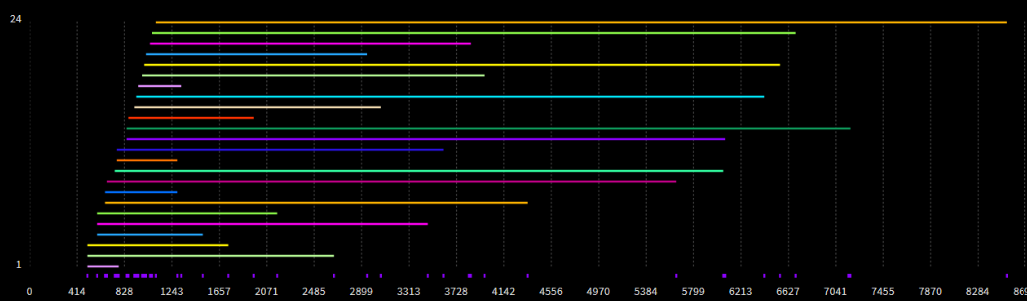
In addition to our well-known route visualization, we now introduce latency visualization. This view focuses on individual transactions, clearly showing when each transaction starts and when it ends. With this graph, it becomes easy to analyze duration-related behavior and to understand how transactions are distributed across simulation time at every time point.
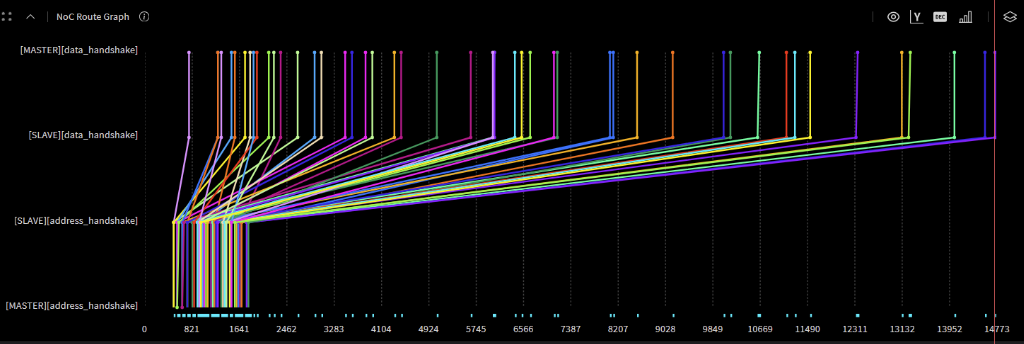
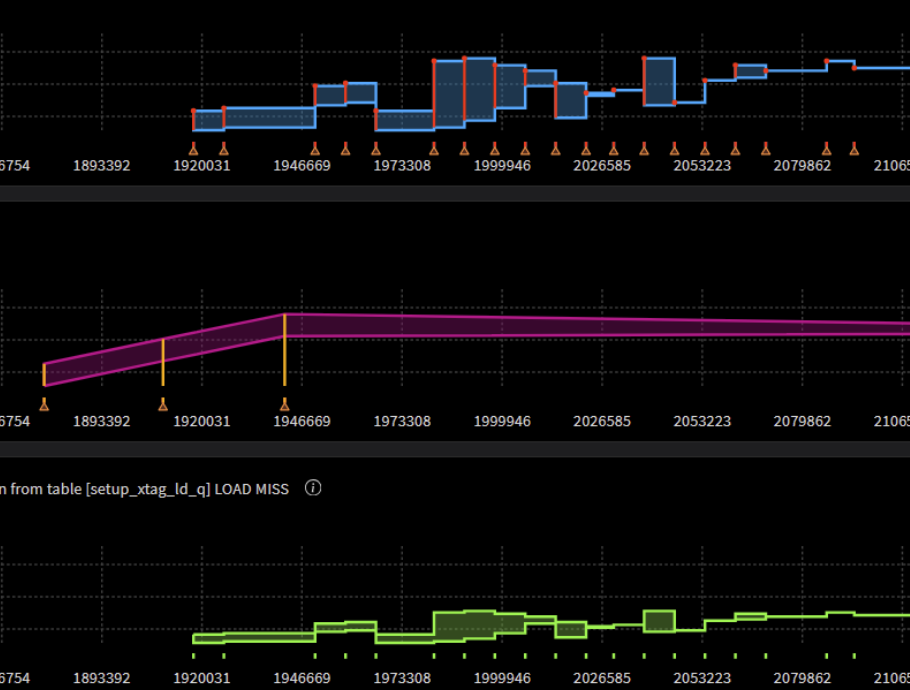
These new visualization types help users understand trends more easily when there are many occurrences within a small-time range. Instead of overwhelming the viewer with raw data points, Cogita-PRO applies specialized aggregation algorithms to summarize values and present them in a clear and meaningful way. This makes trend analysis faster and more intuitive, even for dense and noisy datasets.
With these enhancements, Cogita-PRO continues to push the boundaries of how simulation data can be explored and understood through visualization.
Access comprehensive documentation and step-by-step video guides directly within Cogita-PRO. Learn debugging workflows and tool features at your own pace with integrated multimedia content.
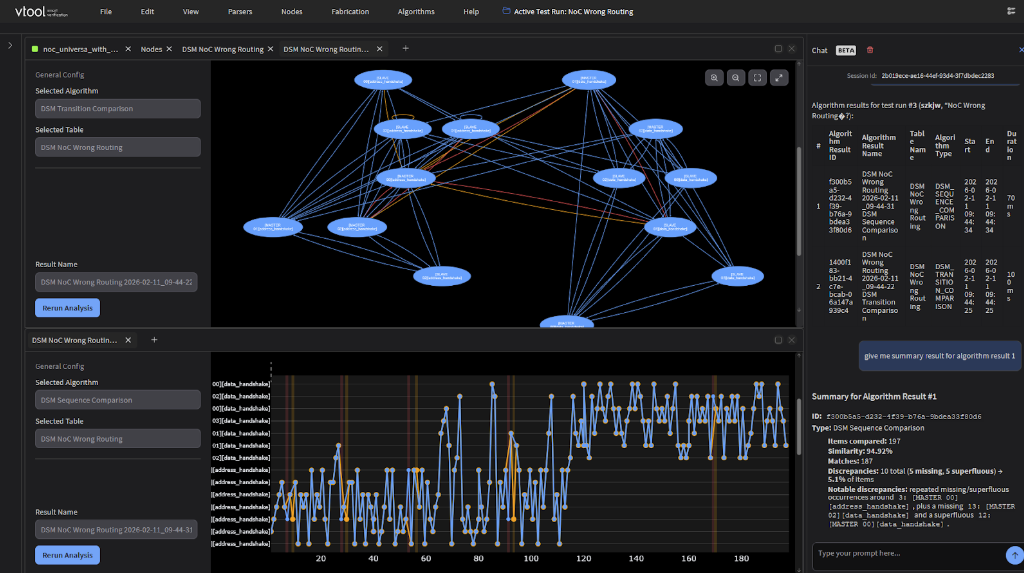
We’re excited to announce the new AI-driven architecture of Cogita-PRO - purpose-built for large-scale verification data, combining intelligent log structuring, advanced analysis algorithms, and high-performance visualization. By eliminating log size limitations while improving performance and delivering algorithm-guided context directly to Large Language Models, Cogita-PRO enables verification engineers to extract meaningful insight from massive simulations faster and with greater confidence.
With an orchestrator–sub-agent AI architecture, natural-language interaction with simulation data, agentic MCP integration, expanded regression triage algorithms, and powerful new visualizations, Cogita-PRO 2.0 represents a major step forward in how verification data is explored, understood, and acted upon.
Cogita-PRO employs an orchestrator-sub-agent architecture, a hierarchical AI design pattern that mirrors effective project management structures. In this pattern, a central Orchestrator Agent (manager) receives complex, high-level user requests and intelligently decomposes them into smaller, manageable sub-tasks. These sub-tasks are then delegated to specialized Sub-agents (workers), each optimized for specific domains or functions. Each sub-agent is purpose-built to handle a specific Cogita-PRO feature and its associated capabilities.
Cogita-PRO features an intelligent agent that leverages advanced chat capabilities to streamline verification workflows. Cogita-PRO performs cleaning and structuring of simulation log data and provides the LLM with access to relevant information guided by algorithmic outputs, eliminating log size limitations while improving performance.
The agent enables users to:
Cogita-PRO is agentic flow ready. We provide MCP (Model Context Protocol) to give your AI agent a direct 'plugin' to our tool. This means the agent can 'see' your data and 'act' within our platform in real-time, making your workflow faster.
Modern verification workflows generate massive amounts of regression data that can overwhelm even experienced engineers. Our regression triage feature uses intelligent algorithms to distill complex test results into concise, structured summaries specifically formatted for Large Language Model consumption. By preprocessing failure patterns, error signatures, and coverage metrics into LLM-friendly formats, engineers can quickly leverage AI assistants to identify root causes, correlate failures across test suites, and prioritize debugging efforts.
Cogita-PRO continues to grow with the addition of advanced analysis algorithms designed to tackle complex ASIC and FPGA verification challenges at scale.
We added Extreme Value Outlier Analysis to identify rare but critical behaviors in timing and data distributions. This enables detection of timing violations, performance anomalies, and transactions with unusually high or low field values or occurrence frequencies.
To enhance protocol and control-logic verification, Automated Discrete State Machine Transition Extraction and Modeling now automatically reconstruct FSM transition graphs from logs, detects illegal transitions against golden models, and correlates behavior across multiple concurrent FSMs.
We also introduced Automated Discrete State Machine Sequence Extraction and Modeling, which focuses on temporal behavior. It detects illegal event orderings, highlights sequence differences between pass and fail runs, and uncovers unexpected interaction patterns and causality chains across FSMs.
These additions further strengthen Cogita-PRO ability to automatically extract actionable insight from both small- and large-scale verification data.
At Cogita-PRO, we are strong believers in the power of visualization. Clear, high-performance graphical insight is essential for understanding complex simulation behavior, especially when working with large-scale ASIC and FPGA data. That belief drives our continued investment in adding richer, faster, and more expressive visualizations with every release.
Cogita-PRO is a leader in high-quality graphical presentation of simulation data. Our team has invested significant effort in optimization and performance, ensuring smooth interaction even when visualizing very large datasets.
In the latest release, we introduce several new visualization capabilities:
In addition to our well-known route visualization, we now introduce latency visualization. This view focuses on individual transactions, clearly showing when each transaction starts and when it ends. With this graph, it becomes easy to analyze duration-related behavior and to understand how transactions are distributed across simulation time at every time point.
These new visualization types help users understand trends more easily when there are many occurrences within a small-time range. Instead of overwhelming the viewer with raw data points, Cogita-PRO applies specialized aggregation algorithms to summarize values and present them in a clear and meaningful way. This makes trend analysis faster and more intuitive, even for dense and noisy datasets.
With these enhancements, Cogita-PRO continues to push the boundaries of how simulation data can be explored and understood through visualization.
Access comprehensive documentation and step-by-step video guides directly within Cogita-PRO. Learn debugging workflows and tool features at your own pace with integrated multimedia content.
This release is another step in our ongoing mission to simplify verification workflows and help engineers focus on solving the hardest problems in design validation. We are already hard at work on the next set of features and capabilities, and we are excited to share what’s coming next very soon. Stay tuned—there is much more to come.